In a world full of numbers, charts help us see the story behind the data. Among all data visuals, pie chart design remains one of the most familiar and powerful ways to show proportions and percentages. When designed correctly, a pie chart can instantly communicate how parts relate to a whole — without overwhelming the viewer.
From business reports and marketing presentations to educational materials and dashboards, pie charts play a vital role in visual communication. However, poor design choices can make them confusing or misleading. That’s why good pie chart design is just as important as the data itself.
👉 Want clean, professional pie charts for reports or presentations? Hire a data visualization designer on Fiverr to turn your numbers into clear visuals.
What Is Pie Chart Design?
Pie chart design is the process of visually representing data as slices of a circle, where each slice shows a proportion of the total. Each section’s size corresponds to its percentage value, making it easy to compare parts at a glance.
Pie charts are best used when you want to highlight relative distribution, not detailed comparisons. A well-designed pie chart focuses on clarity, balance, and readability — not decoration.
Why Pie Chart Design Matters
Pie charts may look simple, but their design has a big impact on how information is understood. A cluttered or poorly labeled chart can confuse viewers, while a clean one builds trust and clarity.
Good pie chart design helps to:
- Communicate data quickly
- Improve decision-making
- Enhance reports and presentations
- Make data accessible to non-technical audiences
- Strengthen visual storytelling
👉 Need charts that look professional and easy to understand? Work with a Fiverr designer who specializes in clear data visualization.
Key Elements of an Effective Pie Chart
To design a pie chart that actually works, you need to focus on a few essential elements:
- Limited Number of Slices – Ideally, keep it under 5–6 sections for clarity.
- Clear Labels – Percentages or category names should be easy to read.
- Consistent Color Scheme – Use contrasting but harmonious colors.
- Logical Ordering – Arrange slices from largest to smallest when possible.
- Balanced White Space – Avoid clutter around the chart.
These principles ensure that your pie chart communicates, not confuses.
👉 Struggling to organize your data visually? Hire a professional chart designer on Fiverr to create clean, presentation-ready pie charts.
Types of Pie Chart Designs
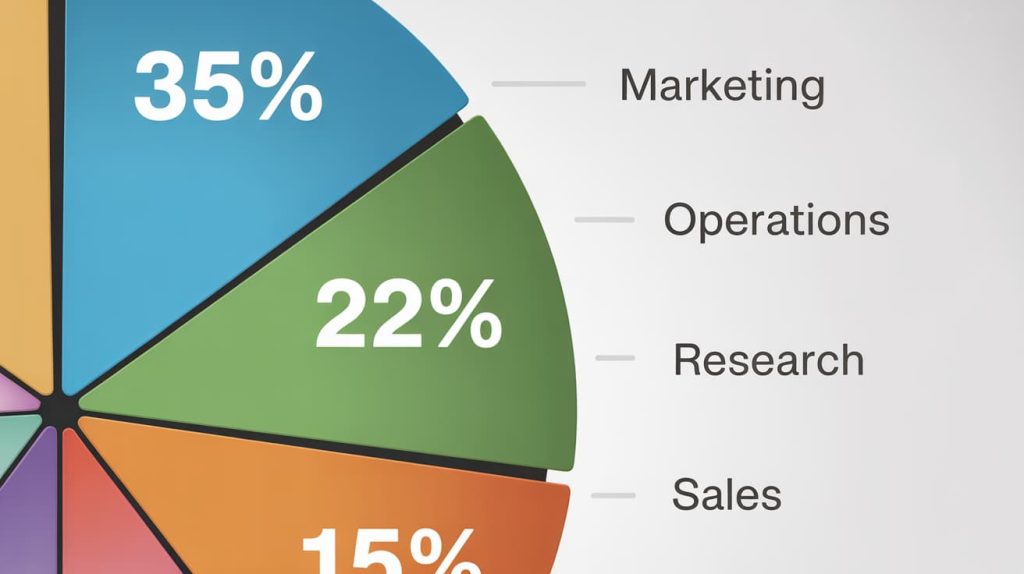
Pie charts come in different variations, each suited for specific use cases. Choosing the right type improves understanding instantly.
1. Standard Pie Chart
The classic circular chart showing proportions clearly. Best for simple datasets.
2. Donut Chart
A modern variation with a hollow center, often used to display totals or key metrics inside the circle.
3. Exploded Pie Chart
One or more slices are separated to emphasize important data points.
4. 3D Pie Chart
Adds depth but should be used carefully, as it can distort perception if overused.
5. Interactive Pie Chart
Common in dashboards, allowing users to hover or click for details.
👉 Not sure which pie chart style fits your report or dashboard? Consult a Fiverr data visualization expert for the right design choice.
How to Design a Pie Chart Step by Step
Creating an effective pie chart involves more than just inserting data into software. Here’s a clear design workflow:
- Understand the Data – Ensure values add up to 100%.
- Decide the Message – What insight should viewers notice first?
- Choose the Right Chart Type – Pie or donut? Static or interactive?
- Apply a Clean Color Palette – Avoid overly bright or clashing colors.
- Add Labels Thoughtfully – Keep text concise and readable.
- Review for Clarity – Remove unnecessary elements or effects.
👉 Want someone to handle chart design professionally while you focus on insights? Hire a Fiverr chart designer to create polished visuals fast.

Tools Commonly Used for Pie Chart Design
Designers and analysts use various tools depending on complexity and presentation needs:
- Microsoft Excel / Google Sheets – Quick and functional charts
- PowerPoint / Keynote – Presentation-friendly visuals
- Tableau / Power BI – Advanced data dashboards
- Adobe Illustrator – Custom, branded pie charts
- Figma – UI-focused and interactive data visuals
👉 Need custom-branded charts that match your brand style? Find a Fiverr designer experienced in Illustrator or Figma for premium results.
Best Practices for Clean and Honest Pie Charts
To keep your charts effective and trustworthy, follow these best practices:
- Avoid too many slices
- Never distort proportions
- Use flat design instead of heavy effects
- Ensure color contrast for accessibility
- Always label clearly
A good pie chart should feel effortless to read.
👉 Want your charts to look clean, accurate, and professional? Hire a Fiverr data visualization specialist to refine your designs.
Where Pie Chart Design Is Commonly Used
Pie charts are widely used across industries and platforms:
- Business and marketing reports
- Financial summaries
- Academic and educational materials
- Website dashboards
- Social media infographics
Their simplicity makes them ideal for communicating high-level insights quickly.
👉 Creating charts for reports, dashboards, or presentations? Work with a professional designer on Fiverr to make your data visually compelling.
Conclusion
Pie chart design is one of the most effective ways to communicate proportions and distributions — when done correctly. Simplicity, clarity, and honesty are the foundation of a great pie chart.
Whether you’re preparing a business presentation, report, or digital dashboard, well-designed pie charts help your audience understand the story behind the data instantly.
👉 Ready to turn raw data into clean, meaningful visuals? Hire a professional pie chart designer on Fiverr and make your data speak clearly today.